Tuesday, May 28, 2019

As blue as Marseille


As with many a port cities, Marseille’s demography has been shaped by its port. Today, its populace is a healthy mixture of the neighbouring Corsicans, Italians, Armenians, the Algerians and many others. In short, it combines big-city swagger and fishing-village sociability.


What strikes immediately as you descend up on Marseille is how blue everything looks. The clearest skies are outlined by monochromatic land that instantly gives way to another shade of the deepest blue in the shape of the Mediterranean Sea. And then as you walk alongside the Old Port of Marseille, you realise that this was the setting that Ludlum chose to introduce his hero Jason Bourne who was found floating unconscious in the Mediterranean Sea near Marseille, located in southern France.

Life revolves around water
The present port city is nothing like that it used to be in the early 1900’s. Historically, the economy of Marseille was dominated by its role as a port of the French Empire. A major portion of the port and docks have now been redeveloped and house restaurants and bars. Having said that, the city’s economy is still linked to its commercial port. Cruise liners can be seen docking at the terminal with regular frequency to and from Algeria, Corsica, Sardinia, and Tunisia, making it even more busy in tourist season. And since Marseille is part of the French Riviera resort coastline area, the port is also a departure point for Rhone River cruises to Provence and Burgundy – France’s main wine regions.

Fishing obviously is an important part of Marseille life and the food economy of Marseille is fed by the local catch. At its heart is the Vieux-Port (Old Port), where fishmongers sell their catch along the boat-lined quay. It comes as no surprise then that Marseille’s most famous dish is a seafood dish called bouillabaisse!

Sites and sounds!
It will be blasphemy to not talk about the mother of all noteworthy sites in Marseille – the Notre-Dame de la Garde or Our Lady of the Guard. This Catholic basilica is the city’s best-known symbol and can be seen from anywhere in the city, built on the foundations of an ancient fort at the highest natural point in Marseille.

Chateau D'If

Another point on the axis which is worth exploring (and perhaps even reminiscing about) is Chateau D’If made so famous by Alexandre Dumas. It is the fortress (and later a prison) made famous by his novel ‘The Count of Monte Cristo’ and is just about a 20-minute boat ride from the port. Though the Count was fictional, you can see the hole through which Dumas had him escape.

However, the weather in Marseille is unpredictable and the infamous mistral winds can overturn your plans within minutes. So it is good to have a plan B, which could be to discover the oldest district of France and a historical quarter called ‘Le Panier’, which literally translates to ‘the basket’. It’s narrow, hilly lanes can best be explored on foot, which can be done in about two hours.
  

Must buy!
All these activities can be done using the Marseille City Pass! It is dedicated to individual visitors who wish to discover Marseille with an all-in package. This pass is valid for 24, 48 or 72 hours and allows access to many attractions.


Did you know?
Marseilles has a history of soap-making and the Marseille soap or ‘Savon de Marseille’ is a traditional hard soap made from olive oil that has been produced around Marseille, for about 600 years.
 
Savon de Marseille

Don’t miss
The MuCem stands out as a great museum dedicated to the Mediterranean. This cutting-edge structure with breath-taking architecture opened its doors in June 2013 while Marseille was the European Capital of Culture. Its intricate building was designed by architect Rudy Riciotti and it was the first museum entirely dedicated to Mediterranean culture.

The MuCem


Wednesday, May 22, 2019

Scratch that itch


Even as more and more travellers discover the magic of exploring a destination through experiences, the experiences that they seek are also undergoing an evolution of sorts. They are getting more and more local and specific – like visiting the local markets or attending a traditional wedding ceremony. Hyper-local is where tourism is heading towards.

In fact, according to TripAdvisor, taking classes and workshops is one of the fastest-growing types of local experiences globally. Learning the intricacies of the region’s textile weave or studying the local dialect/dance form affords travellers huge bragging rights!


However, one kind of experience is eclipsing all the others and it involves food! It is the mother-of-all, most primal instincts that travellers like to indulge. Whether it is culinary tours, cooking classes or street-grub tours, food inspires the traveller and the gourmand in us. What has fuelled this passion further is the social media tool – Instagram! Suddenly there is an explosion of food-based travel that highlights the specialities of that destination. Tourism boards quickly caught on to this trend and have been promoting their country’s foods and beverages like never before. Videos of food-tastings and chefs making local dishes are going viral quicker than any other activity.


All this is possible only if there is help from an ‘insider’ – a local who can help travellers explore the destination like a local and make the entire process more interactive, more educational, rather than it being just about gazing through the window of a tour bus. Technology plays its role as well. Smart phones and various travel apps help travellers scratch their itch – even while on the move. Itinerary changes, buying additional experiences, sharing videos and photos even as they are experiencing it, have all been possible with the help of technology. A common thread that binds all the above experiences though is ‘authenticity’ not just from its giver but also from its receiver in an effort to undertake unfeigned and sincere journeys.     

Wednesday, June 27, 2018

Is it remote enough?


Mainstream doesn’t cut it anymore. How much it costs doesn’t matter. They don’t care if everyone is doing it. All they ask is, ‘Is it unique and isolated?’

Mature travelers are not only seeking experiences, but they have already started to discriminate between experiences in favour of the ones that are off the beaten track, difficult to find, never-heard-of places and things to do. In short, something that doesn’t come in the top 10 Google search. This in turn is prompting operators to look hard for products and activities that not many in their market are offering, or even know of.


Taking a dive in El Nido, The Philippines 

An unfortunate turn this new wave is taking is that social media influencers are being trolled for showcasing ‘secret haunts’ online for fear that these dearly-loved spots of locals will see a stampede of such travelers looking for Instagram-worthy places. Fortunately, such incidents are rare and lie on one end of the spectrum. But they indicate the growing demand for places that are not crawling with tourists – a trend that is slowly being defined as luxury. 

The truth is that by and large, travelers have become explorers and discoverers. They don’t want to merely travel. Whether it is just being part of a sustainable environment or wanting to race on an F1 track onboard a cruise liner in the middle of the ocean, it is the experience that matters – not so much the cost or the destination and definitely not its popularity.


The India market is slowly moving towards this trend but there is still a large percentage of Indians who continue to enjoy their annual holiday in Thailand or Dubai. These numbers are surprisingly high. But in a way it balances the scale and allows the others to pursue their dream holidays, except that this niche of travelers doesn’t want to ‘lose themselves’ or ‘escape life’. They want to experience everything and come alive to every new moment they witness. 


Tuesday, June 12, 2018

Get inspired by Lisbon


The sunny capital of Portugal, Lisbon disguises itself as a quaint coastal town during the day which, by night, turns into a cosmopolitan city with mega clubs lined along the waterfront from Santos to Santa Apolónia.
 
The Pena National Palace which is a day trip away from Lisbon

Laid-back and relaxed- Lisbon is a dream come true for those who wish for a relaxed time by the beach or a slow walking tour along cobbled alleyways and ancient ruins. A mild climate with more than 3,000 hours of sunshine a year, fabulous beaches, and the trademark seven hills that surround Lisbon allow for a myriad of spots from where you could capture a scenic view of the city.
One of the world's oldest cities, Lisbon predates the likes of London, Rome and Paris by hundreds of years. Home to a culture that has brought about much archaeological advancement, the must-see historical sites of Lisbon are the Jerónimos Monastery and Belém tower, both classified as UNESCO World Heritage Sites.

Rebuilt after the devastating 1755 earthquake, the Lisbon Baixa attracts the most visitors because of its connection with history, and simultaneously also because of urban delights. Considered as downtown Lisbon, it was a historical square designed in a fascinating earthquake-resistant neoclassical fashion. Now lined with cafes that are perfect for quiet evening meals, Baixa is open till late at night, which is when the party-goers flock into the plazas and avenues for a night on the town.

From the winding streets, centuries-old houses and traditional shops, Lisbon is surrounded by nostalgia for its past, but the people have learnt to not dwell on it. In fact, sunny Lisbon warmly invites you to learn the art of leisure from the city and its people, to follow the relaxed cafe culture, to unwind and live life to the fullest.

Portugal was founded in 1143, making it one of the oldest nations in Europe. Portugal is named after its 2nd largest city, Porto. There are 15 UNESCO World Heritage Sites in Portugal (ranking it 8th in Europe and 17th in the world); and each year more than 13 million tourists visit the country. 

With the longest bridge in Europe, Portugal is also a very popular destination from India for those looking for a Euro break and an extension to their Spain and Morocco itineraries. The total flight duration from Portugal to India is 10 hours, 42 minutes and India is 4:30 hours ahead of Portugal.

Cheery blossoms in Shandong

The ever-popular and beautiful sight of cherry trees blossoming can be experienced at Zhongshan park in Qingdao which is located in east China’s Shandong province.


Every year, from mid April to May, visitors flock to experience the stunning cherry blossom festival held in Zhongshan park. The 600m oriental cherry road, better known as the Cherry Blossom Corridor, has more than 20,000 cherry trees transplanted decades ago from Japan; which turns into a beautiful shade of pink that is postcard worthy! First celebrated in 1930s, the Cherry Blossom festival held in Zhongshan park has a history of more than 80 years. 


Another interesting way to witness these stunning cherry blossoms is from the sky through a cable car. There is also an amusement park within the vicinity, for kids to enjoy various rides and fun activities

Thursday, May 3, 2018

The coffee culture in Frankfurt


There are many places in the metropolis on the River Main where one is able to take some rest while enjoying the myriad pleasures of the city’s coffee scene. 

Frankfurt’s coffeehouses are as diverse as the city itself. Here, the coffee culture is traditional, international, original and experimental! And yet, the city’s caffeine bars also have one particularly important  thing in common – their high degree of quality. 

A popular German-language culinary magazine 'Feinschmeckers' recently rated 525 of Germany’s best places to enjoy coffee and cake. Unsurprisingly, Frankfurt fared very well in this national comparison.

Wackers Café
The family business of Luise Wacker has been proffering its coffee creations for more than a century. The time-honoured establishment is also known to have been Frankfurt’s very first coffeehouse. It’s no wonder then that this small café is a true Frankfurt institution, a traditional coffee shop looking back on a long and storied past. 

What’s more, Wackers Café is famous beyond Frankfurt’s city limits. Featuring its very own roasting house, it produces more than 40 different coffee and espresso variations. The establishment also places great value on the 'fair trade' philosophy when purchasing coffee beans.

Kaffeerösterei Wissmüller
Kaffeerösterei Wissmüller is yet another time-honoured Frankfurt roasting house. Located in the heart of Leipziger Straße, a popular Frankfurt shopping street, one finds a rustic café known as Stern. It is nostalgic in its style, featuring coffee dispensers, a large set of traditional coffee scales and an old coffee grinder. Customers sit at small tables that feature old coffee sacks as tablecloths. During summer, the picturesque inner courtyard is a popular place for enjoying a freshly brewed cup of coffee.


Glückskaffee 
Surrounded by unusual coffee variations and confectioneries, guests of Glückskaffee have plenty of unique specialities to choose from. The highlights of the coffeehouse, owner-operated by Martina Rönn, are the two proprietary coffee blends the “wild coffee” and the so-called “kaffa”. This coffee variation grows outside on trees and is picked by the growers themselves. Other popular delicacies include 'bacci', an Italian-style chocolate and hazelnut kiss, almond biscuits, tartufo, and pistachio biscuits.

Naschmarkt am Dom
Nearby, at Naschmarkt am Dom, customers are given the chance to escape the hustle and bustle of the big city. On the café’s ground floor, guests sit on traditional, Viennese-style coffeehouse chairs. On the top floor, things are even cosier, with the clientele relaxing on comfortable French armchairs. The establishment’s garden exudes a Mediterranean atmosphere in the style of the Côte d’Azure. Regardless of where one sits, visitors are served only the best that Frankfurt’s coffee culture has to offer – from traditional Italian espresso to the Naschmarkt special, coffee with cream, the famous Frankfurt Crown Cake liqueur and brittle. Americano, affogato, cortado and chai latte are of course also part of the menu.

The Espresso Bar
Having entered The Espresso Bar, one immediately feels transported back in time. The interior, designed with much attention to detail, and the busy baristas make guests feel as if they’re back in the 1920s! Here, perfection and culinary pleasure are top priority, which is why the café offers only a small but very good selection of coffees. Homemade pies and pastries are also part of the assortment, including the Portuguese speciality, pastel de nata.

Aniis
Aniis, meanwhile, is a hidden gem situated in Frankfurt’s East End district, just a few short steps from the new European Central Bank building. Guests will find it to be a cosy café exuding much African flair. Whether you prefer a latte macchiato, a cappuccino or one of the many 'dripped coffee’ variations, your taste buds are guaranteed a treat. There’s also outdoor seating for al-fresco breakfasts or a homemade lunchtime snack. The Moroccan-style cuisine on offer includes plenty of vegan dishes and tries to do without meat wherever possible.

IIMORI Patisserie
IIMORI Patisserie takes French and Japanese delicacies and blends them into a delectable selection of sweet treats. Those who like unusual products will feel right at home here. The patisserie’s bakehouse is particularly well known for its exotic cakes, tarts and pies. IIMORI naturally also has a number of green tea-flavoured delicacies. There’s also an excellent selection of tea and coffee specialities. The stylish patisserie features an aesthetic blend of designer furniture.

Café im Liebieghaus
Café im Liebieghaus is an idyllic and highly cultured place where people with a penchant for art come to enjoy a brief respite. The café’s interior impresses with a cosy fireplace lounge, medieval-style arches and winged chairs set before a warm hearth. The beautiful Italian-style inner courtyard belonging to the museum café is another excellent place to spend a few quiet moments. Menu favourites include the wonderful cakes and the many quiche varieties.

Tip: Maximise your coffee experience with a slice or two of Frankfurt’s most popular confectionery, Frankfurt Crown Cake, which consists of alternating layers of biscuits rings, buttercream and redcurrant jelly. Once completed, the cake is garnished with brittle and decorated with cream roses and cocktail cherries.


Tuesday, February 6, 2018

Guest post: Lots of surprises in New Zealand

I had planned to spend the next day at the Bay of Islands, which is the northernmost region of New Zealand. It was a 3-hour drive from my apartment, so I started at 7am. 

With nothing but a strong coffee and music to keep me company, I enjoyed the drive to Paihia, one of the more popular towns in Bay of Islands. After grabbing a quick breakfast, I took the ferry ride along the bay. The surprise element of this ferry was that it went through one of the nearby caves, which was a unique experience. I then drove to Waitangi, which is where the Maori treaty was signed. After spending a couple of hours learning about the Maori history, I stopped at their café for lunch. 
Cape Reinga

New Zealand is famous for its green-lipped mussels, which are rarely found in other countries, and not all restaurants serve this delicacy. To my surprise, this café was serving a lot of gourmet dishes, including green-lipped mussels, at very reasonable prices. I treated myself to a portion of fresh mussels, and also had a seafood chowder. Both dishes were lip-smacking delicious!
Road trip to Bay of Islands

After a heavy lunch, I drove further north to the Cape Reinga Lighthouse. This literally is the northernmost tip of New Zealand. The view was spectacular. I stayed there till sunset, and then decided to drive back to Auckland.
I had planned to spend the next 3 days in the South Island, primarily in Queenstown and Milford Sound. I took an early flight from Auckland to Queenstown, and headed to the Adventure Queenstown Hostel. I have stayed in a lot of hostels in the last few years, but this is by far the best hostel in terms of service and facilities. 
Queenstown view

The staff was friendly, and helped me chalk out the details for my time in Queenstown. What impressed me the most about this hostel was that they had GoPro cameras that could be rented, free of cost! I took advantage of this opportunity, and borrowed their camera for all my adventures in Queenstown. 

The Ledge
The first of my adventures was at The Ledge, situated at walking distance from my hostel. I took a gondola ride to the top, and got strapped up for the Ledge Bungy and Ledge Swing. Both activities were absolutely mind-blowing. 

Most bungy locations require the harness to be strapped to one’s ankle, but the Ledge bungy provides more freedom by allowing the harness to be strapped to the waist. The view from the top was amazing, which made the experience even more memorable. Post completing both activities, I decided to try the Luge rides at the same location. Racing with the kids was definitely fun, and it instantly made me feel more energetic.


(Read the first part of this guest post by Keith here)

***************************************************************

Keith D'Souza is an IT professional based in Bengaluru. When he is not doing solo trips, he is undertaking Himalayan treks. He has visited 14 countries till date and intends to hit the 100 mark some day. His introduction is not complete without mentioning his undying love for food, especially local cuisines.  

Wednesday, December 20, 2017

Guest post: New Zealand - Heaven on earth?

It could very well be. New Zealand had been on my bucket list for many years, ever since I first watched Lord of The Rings. After my first glimpse of Middle-earth in the theatre over 15 years ago, I knew that I had to find a way to visit those beautiful places some day

And then it happened. Earlier this year, I was chatting with my cousin who lives in Australia, and he shared details of his incredible vacation in New Zealand. That was my cue. I knew I had to do a solo trip to New Zealand, but was contemplating the expenses that I would have to incur. After spending the next few days on Skyscanner, I found some great deals on flights. Over the weekend, I booked my flights and applied for my tourist visa. 
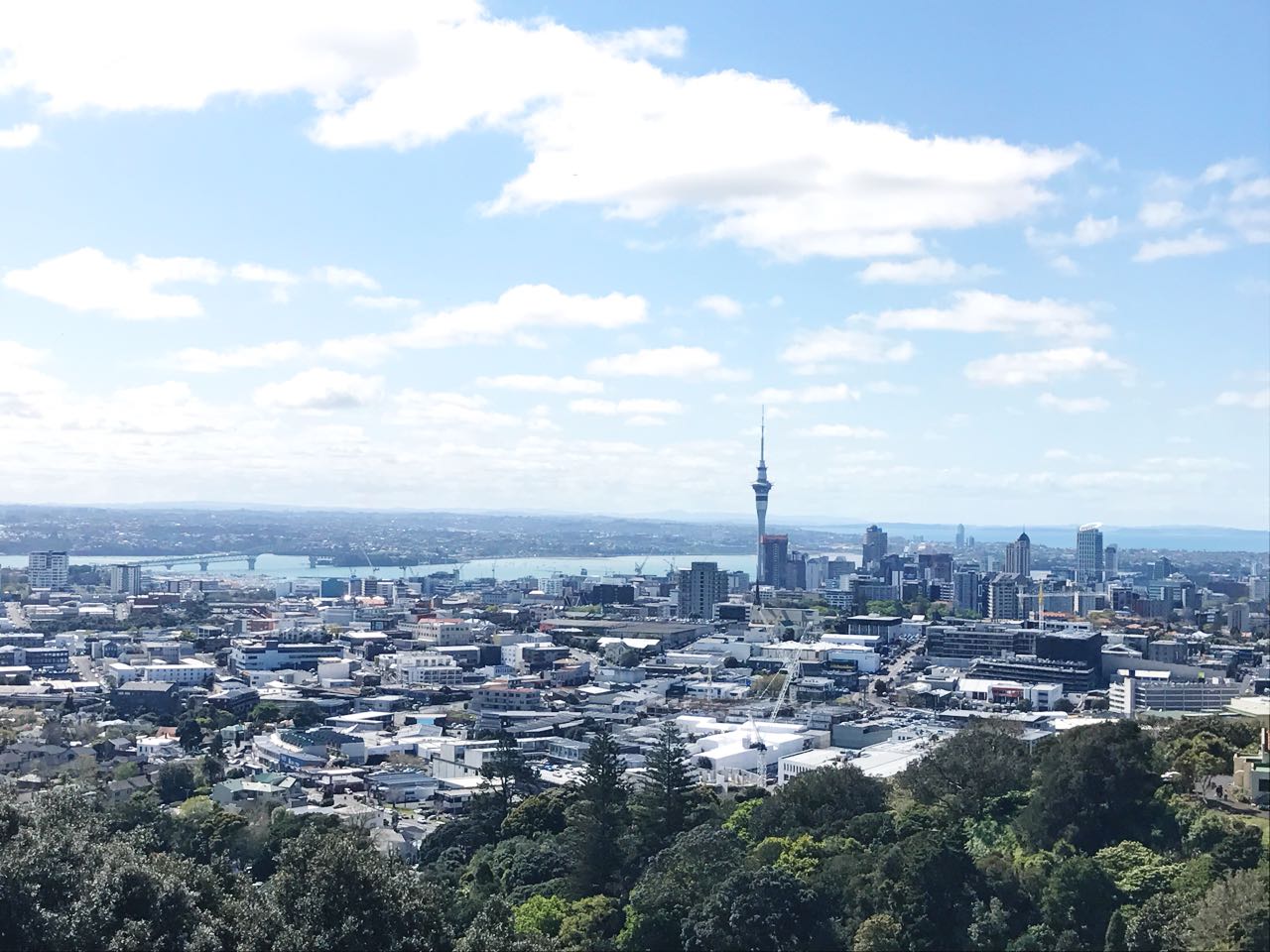
Auckland skyline

I planned to visit a few significant places in both the North and South Islands, and I knew it was going to be hectic. All my stay was booked via Airbnb or Hostel World. One month from then, I would land in Auckland!
Mission Bay Beach
I landed in Auckland after a 13-hour journey via Malaysia. I took a taxi to my cozy apartment by the beach, which I booked on Airbnb. After dropping off my luggage, I decided to take a walk to the CBD. Fresh air and clean streets - a great start to my vacation. I walked along the Viaduct Harbour, which had many of the best restaurants in Auckland. 

The foodie in me was craving dinner, and I was spoilt for choice. I decided to start with The Viaduct Grill, tempted by the seafood and pork options on their menu. The seafood pasta was loaded with succulent mussels and shrimp, and I gobbled down the entire dish. After an amazing meal, I strolled back to my apartment, and was looking forward to the adventures in store for me.

I woke up before sunrise on the second day and I used the early hours to plan out the finer details of my trip. I rented a car from Hertz, and headed straight to the Harbour Bridge. With hardly any vehicles on the road, the drive was very pleasant. I took the time to walk around the bridge, but could not get a slot for the Bungy. For the more adventurous at heart, the Bungy at the Auckland Harbour Bridge is a must do! 
Art Museum
Art Museum
After spending a couple of hours at the Art Museum, I had lunch at Elliott Stables. This is a unique food court with many different cuisines. I tried a few Brazilian and Filipino dishes, and every dish was delicious. 

I spent the rest of day visiting the War Memorial Museum, Sky city (casino) and Sky tower. I got to learn so much about the Kiwi culture and people. I then drove to the Mission Bay Beach, and enjoyed the beautiful sunset while sipping on a steaming cup of chili hot chocolate. It was a beautiful evening, and a perfect end to the day.

Other places to visit in and around Auckland are the Rangitoto Island and Waitakere Ranges.


***************************************************************

Keith D'Souza is an IT professional based in Bengaluru. When he is not doing solo trips, he is undertaking Himalayan treks. He has visited 14 countries till date and intends to hit the 100 mark some day. His introduction is not complete without mentioning his undying love for food, especially local cuisines.   

Wednesday, December 13, 2017

Guest post: Why we travel

I often wonder! Why do we travel? Why is it some have a tremendous urge to explore the unseen, while others are simply content living in the cozy comforts of a place they lovingly refer to as 'home.' It doesn't need hours of pondering to spell out the reasons. 

In the words of a great travel writer Pico Iyer, 'we travel firstly to lose ourselves; and we travel next, to find ourselves. We travel to widen our knowledge and to go beyond newspaper reports and television coverage. We travel to expose myths and to understand more about cultures. We travel to bring the 'child' back into our lives, something we may have left behind as teens and we travel to reverse time. We travel, to escape the humdrum of a non-existential existence we are at times exposed to, day in and day out. We travel to get rid of our prejudices, and when we travel, the greatest discovery and joy is in seeing new places with new eyes and an open mind.’ 

Travel brings many unexpected pleasant surprises, like the time we were in a village close to the Fagaras mountains not far from Sibui, Romania. After a long tiring trek we stopped at a village to catch our breath and admire the scenery. Moments later a middle aged woman came to us with cups of steaming coffee. Not understanding the language seemed to possess no hindrance; on this occasion it was the kindness of a person who understood our need for a warm drink. Then there was this memorable moment when a Yemeni national paid for our taxi fare in Sanaa because we did not possess the necessary change in Yemeni rials to compensate the taxi driver, while travelling from our hotel to the old quarter. He also refused to accept the dollars we offered him. We were touched by this momentous gesture. Talk about unpredictability, there’s plenty when on the road. 

During my short and limited stint in the amazing world of travel, I have been exposed to quizzical situations, and events, not all of which were my own making. Like I learnt, people stand in queues not only in front of bread shops in Moscow or in bus stands in Mumbai. I had to stand for over an hour to enter a casino in Kansas and have stood for roughly the same amount of time to enter the Beer Market in Toronto. 

I was warned not to enter a nightclub if I didn't have the money in Kowloon, Hongkong. I learnt rather sadly, that a miniscule percentage of the world’s population is mean, ignorant and probably racist. While standing at a rail platform in Western Europe, I was spat upon by a young teenager in a passing train. Poor lad, his aim wasn't too good! May he L.I.P (Live in Peace)! 

By the same measure, after a most fascinating day inside an Indian wildlife park, our Indian guide had the gumption to say, he would have received a bigger tip had we been foreigners. Little did he realize the panther was spotted thanks to the efforts of a friend and yours truly, while the tiger family, we spotted hiding in the meadows was first spotted by the village boy, whom we had agreed to give a ride in the first place? The tip if any should have been reserved for us and the village boy! 

Fleeting moments at destinations brings the child back into our lives. Long walks on lonely beaches along the western coast of India, spectacular sunsets in the company of mountains in Ladakh, India; the sight of a male tiger goring its prey in Kanha, central India; cycling across slopes on way to Lake Constanz in Germany, walking along the fort walls in Kumbalgarh Fort with monsoon clouds hovering above brings back many memories we were exposed to when we were children, besides enlivening the proceedings on a dog day afternoon in Mumbai. Thank my good stars, I have quite a number of unforgettable memories all coiled up at the back of my mind. 

Understanding local cultures and behavior enriches travel and makes the whole experience more rewarding. In a village up in the hills, not so far from the city of Muscat, I was treated to cups of 'kawa' or 'chai' or tea, but, not before I had accepted the cup with my right hand and hid the left hand from the host's view (the left hand is considered unclean). For my good behavior, I was once rewarded with the exclusive use of a private washroom (normally reserved only for the innkeeper) at a guesthouse in Phobjika, Bhutan. I was overwhelmed by the gesture and felt like the Prince of Mumbai, while accepting the keys! Incidentally, the room where I slept in had no lock! 

Little do we realize, travel isn't a one-way journey, how we behave and react is carefully noted by locals, not accustomed to uncalled and wild behavior? When we travel we are ambassadors of the lands we come from. Strangely, we are as much a sight for the locals, as they (probably) are for us. At our worst behavior, we can only be termed as 'intruders.’ 

As travelers we are at times like monks, carrying bare provisions and belongings, moving from one place to the next. While visiting the Tongsa Monastery in Central Bhutan, my driver-cum-guide, the ever smiling and amiable Mindro Dorjee, said that he wouldn't be able to enter the monastery since he was not fully clothed, while 'me’ the traveler was excused, even though I had worn a half-sleeved shirt. As wayfarers, we enjoy concessions, while pretending to live a frugal life. 

It goes without saying, when we travel, we fulfill the role of 'courier personnel’, transporting back and forth souvenirs that every culture needs. I made it a point to carry handicrafts; handmade paper, decorative items and leather articles from the Cottage Industries Emporium while in Mumbai, and returned back from my escapades with a bagful of memories, film, perfumes and chocolates. There were no Cottage Industries shops in Toronto, I found exquisite key chains and maple syrup at the duty free shop in Toronto. I used to often wonder, whether it would suffice. It's the thought that counts, which brought me comfort. 

A travel philosopher Santayana once wrote, 'There is wisdom in turning as far as possible from the familiar to the unfamiliar; it keeps the mind nimble; it kills prejudice and it fosters humor.' Pico Iyer has the last word on this inspiring subject- 'the best trips, like the best love affairs, never really end.' 

*************************************************************

Hector Dsouza owns a travel agency in Mumbai called L'orient Travels and he is also the India representative for SouthWest German Tourism. Needless to say, he is an avid traveller and photographer. He is also very passionate about yoga and is a certified Ashtanga yoga instructor from the Yoga Sanctuary in Toronto.

Tuesday, August 8, 2017

A New Zealand for vegetarians

Not eating meat or dairy is zero problem in New Zealand. Vegetarian and vegan dining is both easy and delicious throughout the country. There’s a plethora of places offering wholly plant-based menus and plenty more who let seasonal produce be the hero. 

Here’s a list of a bunch of places that can whet appetite of vegetarians:

Kokako 
Cafe culture is king in New Zealand – their standards for coffee are set high, with uncomplicated, fresh food following suit. Coffee roaster Kokako not only serves the best ethically traded, organic coffee in town, they also offer a completely vegetarian menu (much of it also vegan), showcasing the best of seasonal, organic produce in unfussy, delicious dishes. Try their blends and single origins in espresso or batch brews. Plus there’s kombucha and popular nitro cold brew coffee on tap.

Kokako occupies a beautifully renovated former post office in Auckland’s fringe suburb of Grey Lynn, a five-minute car or 10-minute bus ride from the CBD.
537 Great North Rd, Grey Lynn, Auckland; +64 9 376 6086; weekdays, 7am to 3.30pm, weekends, 7.30am to 4pm.

Gatherings 
Gatherings is a “living wine bar and restaurant” by talented young chef Alex Davies, whose wholly plant-based cuisine is inspired by the bounty of the Canterbury region’s distinct seasons. Walking the talk, Davies spent a year working on an organic vegetable farm in north Canterbury in order to learn more about sustainable food systems. The five-course dinner set menu costs a very reasonable $60, or you can opt for snacks at the bar. There’s an “organic and living wine list” to accompany the cuisine and the space often hosts live performances organised.

Gatherings is located close to the city centre in Christchurch.
Unit 5/2 Papanui Rd, Christchurch; Wednesday-Saturday, lunch from noon to 2pm, happy hour 4pm-6pm and dinner 6pm-11pm. 

Ten Twenty Four 
It’s a recipe for success: a seasoned fine-dining chef, a Spanish Mission-style stucco building at the end of a palm-lined driveway, and the stunning countryside of New Zealand’s Hawkes Bay “food bowl”. Then there’s the food. At Ten Twenty Four, his kitchen counter cluttered by bottles of locally grown garnishes – edible flowers, fronds, shoots and leaves – chef Kent Baddeley transforms left-field ideas into remarkably delicious dishes. Ten Twenty Four isn’t an exclusively vegetarian kitchen, but seasonal, hyper-local produce is the star and those with dietary requirements are well catered for. 

Ten Twenty Four is a short drive out of Hastings in Hawkes Bay. This is wine country, but also where most of New Zealand’s stone fruit is grown. The road to Ten Twenty Four is dotted with orchard stalls, some with honesty boxes.
1024 Pakowhai Rd, Hastings; +64 6 870 6440; Tuesday to Sunday for lunch; Friday and Saturday for dinner.

Boquita
Vibrant Mexican flavours abound at Boquita. This bijou central Wellington spot features a concise organic plant-based menu of tacos, salads and sides made with fresh local produce and top-quality ingredients that the proprietors import directly from Mexico (browse the selection for sale). You can park up at the bench to dine, but if it’s a fine day, grab your goodies and have a picnic at nearby Oriental Bay or up on Mount Victoria, also close, gazing down on the city.

In central Wellington, pretty much everywhere is within walking distance.
23 Kent Tce, Wellington; Tuesday to Saturday, lunch 11.30am-2.30pm, dinner 5pm-9pm. No bookings.

Little Bird Unbakery
The raw cuisine Little Bird Unbakery in Auckland’s Ponsonby certainly won’t leave you feeling cold. In this warm, bright space, you’ll feel the love and attention of the kitchen in everything on the menu, which is predominantly raw, with a few cooked items. Fresh coconuts are cracked open for smoothies, kimchi and kefir are made onsite, as are sprouted breads, nut milks and cheeses. As well as great coffee and an arm-long list of juices and smoothies, there’s a wide range of teas.

Little Bird Unbakery in Ponsonby is just five minutes’ drive from the CBD or a 10-minute ride on the Link bus. Another Little Bird is at Britomart by the train station. Cnr Summer St and Ponsonby Road, Ponsonby, Auckland; +64 9 555 3278; open daily 7am-4pm. 


Visa procedure
One may forward their application to the TT office in Mumbai or Delhi, which will then be directed to Immigration New Zealand. A visitor visa for New Zealand is processed within 15 working days. www.immigration.govt.nz

Airline connections
Connecting flights to New Zealand are available on Singapore Airlines/Air New Zealand, Thai Airways, Cathay Pacific and Malaysia Airlines with stop-overs in their respective hubs.  New Zealand’s international gateways are Auckland, Wellington, Christchurch and Queenstown.

Domestic services
You can fly between all New Zealand cities and most major towns using domestic air services. Air New Zealand and Jetstar are the main providers. Their services are complemented by regional airlines, charter companies and scenic flight operators.

For more information, check: newzealand.com/in or hashtag #NZmustdo    

Tuesday, July 25, 2017

How being fit gave me confidence to trek again

When people new to trekking ask me for suggestions on what they would need for a trek or how they should go about choosing a trek, I always - without an exception - bring up fitness. Do they have a regime? How regular are they? 

I feel that every conversation about trekking expeditions, even with yourself, should start with fitness. I learnt this the hard way though. 

In 2011, i did my first high-altitude trek - the Chadar. I was a newbie and had no idea what I was taking up. No amount of reading or talking to people can really give you a clear picture of what high-altitude trekking involves. And so, i went on the trek with a decent level of fitness. Not exceptional, but just about bordering on satisfactory.     

I realised this while on the trek. I completed it, but i witnessed that the others were having way more fun doing it than I was and i couldn't understand why. Until i returned and retrospected. It turned out that had i been fitter, Chadar would have been less of a struggle. No amount of fancy gear can help you in that situation. A good pair of trekking shoes can mask a flaw or a good sack can prevent a shoulder pain, but beyond that you are on your own.

The Chadar incident dented my confidence so much so that I did not have the courage to even think about trekking again for a full six years! That's a lot of time wasted not trekking. These were my prime years - so to speak - and I was idling sitting in office in front of my laptop and buying things i didn't really need. 

In 2016, i decided that i had done enough moping around and that i should face my fears. The only way i could do that was by getting fit. At least, that was the first step. I started doing a mix of activities - cycling, yoga, running. In 2017, i decided to do a trek - an easy one - to see how i fared. 

I did well and i was satisfied with myself. Then I decided to take it up a notch and do an easy to moderate trek. This time it was Sandakphu. I did that well too. Nay - i was having fun. Finally. 

Cut to the present, I have just returned from the Kashmir Great Lakes trek, which is categorised as moderate to difficult trek. Apart from a slight hiccup (i had to offload my sack from day two because i had packed unwisely), i did well. At least i think i did well. That doesn't mean my fitness levels are superlative. But i know that i am finally a work in progress and not in limbo anymore.

So my request to people who are first-timers or even second-timers is: take fitness seriously. It can make or break not just your trek but also your confidence in yourself as a trekker. 


Tip: You need to do a mix of exercises that will not just strengthen your core and your leg muscles but also some cardio that will help you control your breathing.   


Thursday, May 18, 2017

Sandakphu has the views

At the outset, I'd like to clarify that Sandakphu isn't what one might call a 'major' trek. Schools from Darjeeling and nearby places take their students on this trail. It ranges from an easy to moderate trek, depending upon one's capability, and is sort of commercialised now because of its popularity. 

But don't knock it off. It has the views, and the most amazing of them is the up-close sight of the Sleeping Buddha. It is simply awe-inspiring. It is majestic because of its proximity, so much so that even the outline of the far-off Mount Everest did not arouse as much bedazzlement in me as much as the Sleeping Buddha did. 


And we were so lucky to get a window of clear skies that evening and the following morning while we were camped in Sagargram. 

What's interesting about Sandakphu is that four out of the five highest peaks of the world - Mount Everest, Kanchandzonga, Makalu and Lhotse - can be seen from here. Putting this incredible fact aside though, it is also true that every trail and every trek brings with its own set of joys. And hardships.

We got rains on 2.5 of the six days we were trekking. Leaches were upon us and the cold and wetness made us miserable. Still, our miscellaneous group that consisted of first-timers as well as veterans overcame their own little hurdles and saw meaning in it. 

I have heard regular (and not so regular) trekkers dismiss treks that are common, or popular, or easy as insubstantial or lacking character. But nothing can be further from the truth, and it's not in keeping with the ethos of mountaineering. Every mountain is sacred and special, right?

If my narrative has piqued your interest in the Sandakphu trek, and want to read more about the route, best times to go and places to stay, you might like this blog: Conflating Visions. To sign up with an organised group, i would recommend IndiaHikes.   

Thursday, May 4, 2017

A glimpse of Arunachal

My introduction to the mysterious region of India’s North East was through a short (relatively-speaking) trek into the wilderness of Arunachal Pradesh. The most northeast I had been within India was to Gangtok and I signed up for this trip without too many expectations.
 
Our train from Guwahati to Naharlagun
Arriving at Arunachal
Reaching Arunachal itself was time-consuming. First, take a flight to Guwahati in Assam which in itself was a task because regional connectivity in India still sucks. Direct flights from a lot of cities are few and far between, specially from Mumbai, and are therefore expensive. From Guwahati, I took an overnight train to Arunachal’s capital city of Itanagar. The station is however called Naharlagun. From there, you need to call for taxis (Sumo) or look for state transport bus that will take you to your destination.  
 
There are a couple of check posts once you enter Arunachal. But tourists have no trouble. We weren't even asked to show our permit even once except at the station
Get a permit
To exit the station, you will need to show a permit to enter the state, even for Indian nationals. This, you can get from the Arunachal Pradesh Tourism office in your own city in advance which will cost anything between Rs 60 to Rs 90 depending on the city. But if you can’t, then you pay approximately Rs 450 for a single permit at the airport within 15-20 minutes. Beware though – do not apply for it online. Your application may never get approved!
 
A typical fence of a local home made of bamboo
Trek through a forest
I had signed up for a short 4-day trek that would take us through a forest in the Talley Valley that resides in the Talley Valley Wildlife Sanctuary. The Talley Valley trail winds up and down mountains, valleys and across rivers. On this trek, you cross the Pangey Valley, Talley Valley and Ziro Valley.

The trek is the easy if you’ve trekked before and a good stepping stone for those who haven’t done overnight treks. That said, it is perfect for those who love nature and enjoy just being surrounded by trees. If you want to experience and get to know the culture of Arunachal Pradesh, its best to skip the trek and just focus on visiting villages and towns like Ziro (famous for its annual music festival) and Hong.


Other spots to see
Of course, other spots are known to be much more beautiful like Tawang and Tuting but getting from one place to another takes a lot of time since the roads are in really bad condition. When we there, there was a sudden strike called on by the transporters to protest against bad roads. Unfortunately, by sheer misfortune of being the farthest state of India, Arunachal largely remains out of our government’s mind.    
 
We passed through huge rice paddy fields on the last day of our trek 
Arunachal actually has 12 different tourist circuits which makes it easy for you to choose your route. Check the details here. The state’s tourism ministry website has a lot of information on not just stay and places but also on ministry-approved tour operators who can help with ground arrangements.

Whatever you choose to do though, you will not regret it. Keep an open mind and you will realize that even a seemingly casual experience can have an impact and move you in ways that you may not have expected. Whether it is the people (we discussed state politics with an auto driver who seemed frustrated with the situation), the food (vegetarians have fewer choices though), or the culture (we were invited to share food at a local family’s house party held to celebrate the birth of a boy just because we were passing by).
 
Tall pine trees marked the end of our 4-day trek 

GOOD TO KNOW

Getting a permit
There are different permits needed to access different districts. So choose the spots you want to visit and apply for those permits accordingly.
  
Ziro Music Festival
This year, the festival will be held from September 21st to 24th, 2017. It is billed as India's most fun outdoor music festival. So you can plan your trip accordingly.

Getting to Ziro
Ziro town is about 3-4 hours away by road from Naharlagun station. Once there, you may look up a homestay. We stayed at the state-owned Paradise Guest House, which was pretty decent.